
Khanna calls for nationwide fraud investigation after wealth tax proposal caused firestorm

U.S. Representative Thomas Massie (R-KY), accompanied by U.S. Representatives Marjorie Taylor Greene (R-GA) and Ro Khanna (D-CA), speaks during a press conference on the Epstein Files Transparency Act ahead of a House vote on the release of files related to the late convicted sex offender Jeffrey Epstein, on Capitol Hill in Washington, D.C., U.S., November 18, 2025.
Washington, D.C. — Facing intense backlash from Silicon Valley donors over his endorsement of a proposed statewide billionaire tax, California Democratic Representative Ro Khanna is launching a bipartisan congressional effort to root out government fraud. The move is a calculated attempt to rebuild public trust and address a core argument of wealthy opponents: that new tax revenue would be wasted through mismanagement and corruption.
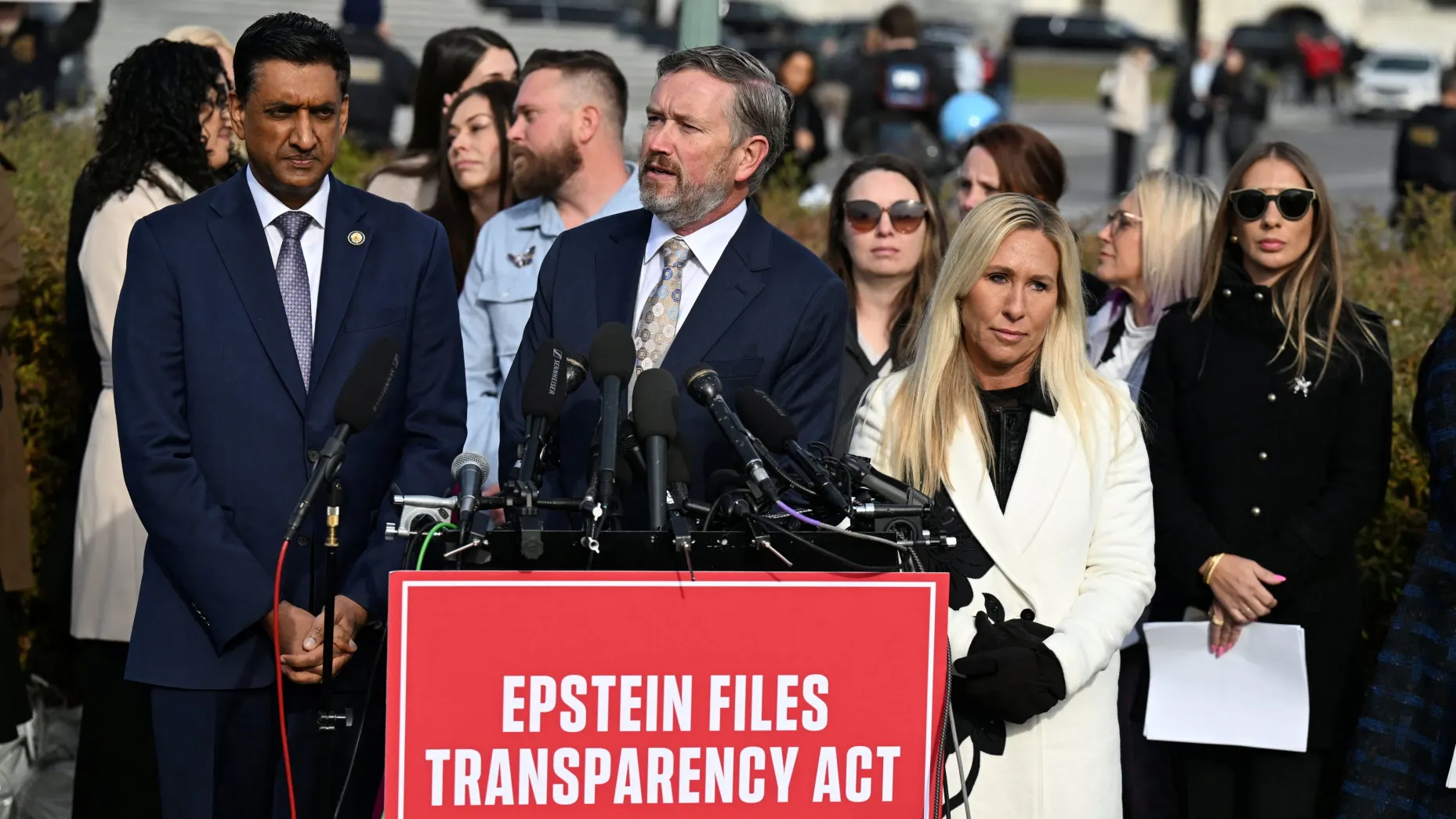
Khanna, who represents Silicon Valley, told CNBC that securing the "public trust" is essential to advancing progressive fiscal policies. "You can’t have corruption in the government and waste... and then expect people to support the progressive ideals that I have," he stated. His plan involves partnering with a Republican colleague to commission a Government Accountability Office report and hold hearings on state-level fraud, modeling his recent strategic partnership with Kentucky Republican Thomas Massie to release Jeffrey Epstein-related files.
Navigating a Political High-Wire Act
The controversy stems from Khanna's support for the "2026 Billionaire Tax Act," a ballot initiative pushed by labor unions to impose a one-time 5% tax on California billionaires to fund healthcare. The proposal has sparked threats from some tech elites to leave the state and fund a primary challenge against Khanna. Prominent investor Chamath Palihapitiya argued that without first auditing spending and eliminating fraud, a wealth tax merely creates "incentives for... larceny."
Khanna's response is a nuanced strategic pivot. By proactively championing oversight, he aims to disarm critics who cite high-profile fraud cases in Democratic-led states like California and Minnesota. He insists the investigation will be non-partisan, targeting waste "not just an issue against blue states." This high-stakes political maneuver seeks to separate the debate over tax policy from concerns over government efficacy.
Addressing Tech's Core Concerns with a Policy Carve-Out
Simultaneously, Khanna is addressing specific industry fears about the tax applying to "paper billionaires"—founders with high valuations but illiquid, restricted stock. He acknowledged the need for "workarounds" to ensure the tax doesn't "hurt the startup paper billionaires," signaling a willingness to refine the policy to protect the innovation ecosystem he represents.
Khanna's dual-track approach—aggressively pursuing oversight while offering policy concessions—highlights the delicate balance he must strike as a progressive Democrat in the heart of America's wealth-generating competitive economic landscape. His success may hinge on whether demonstrating a commitment to fiscal responsibility can placate skeptical constituents enough to sustain support for his broader redistributive agenda.
Recent
News



Newsletter
Subscribe to our mailing list to get the new updates!

Subscribe our newsletter to stay updated
Most
Reviews
Invest

Economy
Markets

- Thu, 15 Jan 2026
US Dollar Index strengthens above 99.00 on robust US Retail Sales
Markets

Business

- Sun, 18 Jan 2026